Basement Flooding Cleanup in Ogden, UT
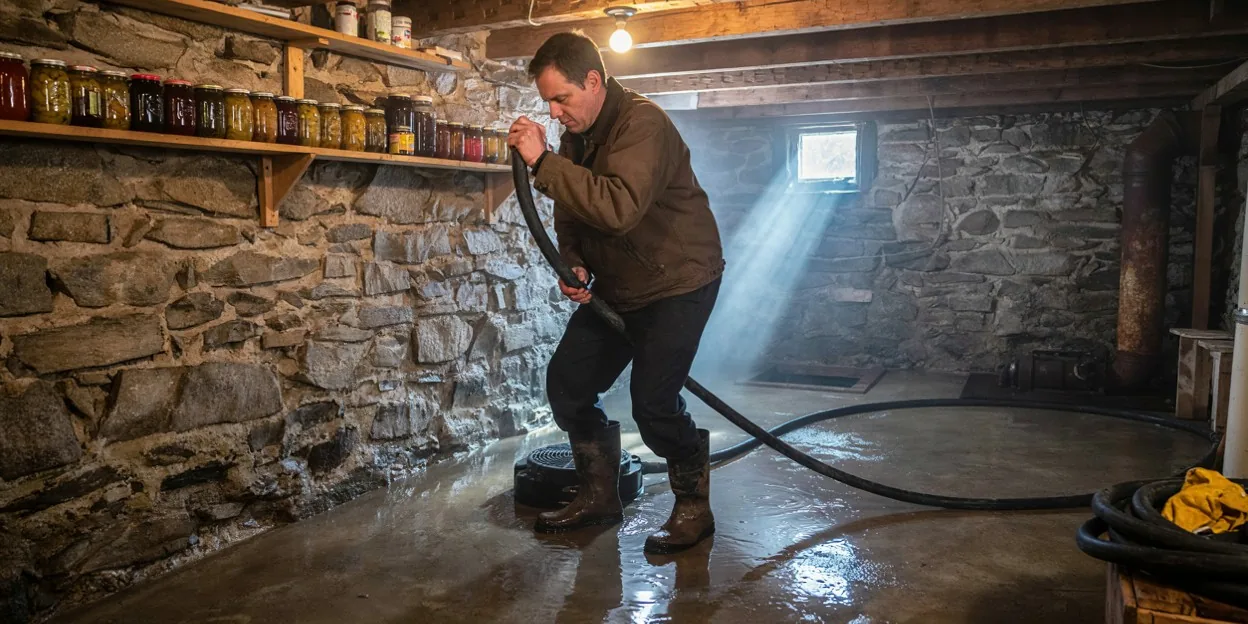
You heard the furnace kick on and then a sound like a running tap, and when you opened the basement door the bottom step was wet and the family room carpet was floating at the corners. This site connects you by phone with an independent local provider who cleans up flooded basements in Ogden and across Weber County.
Where the water came in decides everything downstairs
The crew asks one question before the pump starts: pipe, appliance, window well, floor drain, or sump pit. Clean water from a supply line means the carpet may be saved. Water that came up the floor drain, in through a window well, or over the top of the sump pit is treated as contaminated, and the carpet, pad, and lower drywall it touched usually come out.
Then the water gets pumped and extracted, and the meter goes on the lower two feet of every finished wall, not just the wall by the wet spot. Water on a basement floor spreads along the slab under the pad, so the far wall is often as wet as the near one. The crew checks the sill plate behind the drywall, the framing around the furnace, and the underside of the stairs.
Before you go down the stairs with the shop vac
If the water is above the outlets or reaches the furnace, stay off the floor until the breaker is off. Turn off the main valve on the basement wall if a pipe is the cause. If the sump pit is overflowing, do not reach into it. Get boxes, holiday storage, and anything with a cardboard bottom up onto shelves or upstairs. Photograph each room from the stairs and up close.
Then call. Say how deep the water got and whether the basement is finished. A shop vac on an inch of water is fine while you wait, but it does nothing for the pad and the walls, and it can spread contaminated water into rooms that were dry.
Carpet up, pad out, drywall cut where the meter says
In a clean-water loss the carpet often comes up, gets dried flat, and goes back down over new pad. In a floor-drain or window-well loss it goes out with the pad. Drywall is cut at the height the readings show, usually one or two feet above the floor, and the insulation behind it comes out wet. Framing, concrete, and the slab dry in place.
Finished basements hide the most. Laminate over a vapor barrier traps water on the slab, and paneling over furring strips holds it against the concrete. The crew opens what the meter says and leaves the rest. After the removal, structural drying runs until the readings hit target. If the pit is what failed, sump pump failure cleanup covers the drying and a plumber covers the pump.
Full basements from the 1950s ramblers to the newest west-side lots
Ogden's ramblers went in from the 1950s through the 1970s with full poured basements that families finished a room at a time, so many have a 1970s family room, a 1990s bedroom, and a 2010s bathroom sharing one slab. Water heaters, furnaces, and washers all live down there. Downtown and East Central, the brick bungalows sit over stone and early concrete walls that sweat in spring and take water through cracks when the Ogden River is high.
Out west in West Haven, Hooper, and Plain City, the old lakebed keeps the water table close to the surface, and new subdivisions rely on sump pumps and drain tile from the day they are built. During the record snowmelt of spring 2023 those systems ran for weeks.
A pipe or appliance failure is a sudden loss under many policies. Groundwater seepage and surface flooding are usually excluded, and a sump pump failure often needs its own endorsement. This site cannot read your policy. Ask the crew for photos, readings, and an itemized scope from the first visit.
Calling about a wet basement in Weber County
Have the address ready. Say where the water came in, how deep it got, whether the basement is finished, and whether the power is on down there. Mention a sump pit or a floor drain if either is involved. Call (385) 557-6268.